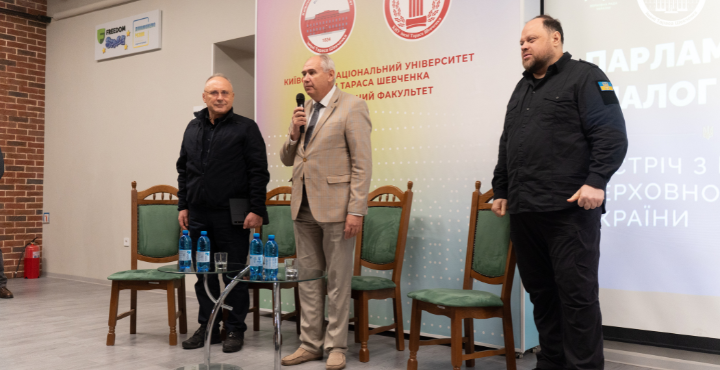
Parliamentary Dialogue Held at Taras Shevchenko National University of Kyiv
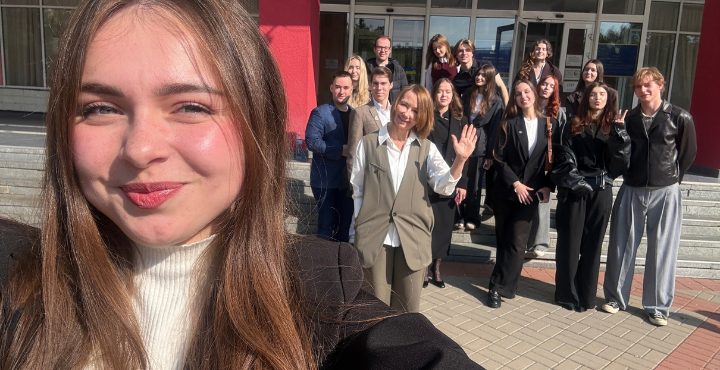
Inna Tsesar, Deputy Director for Student Affairs at the Educational and Scientific Institute of International Relations (ESIIR), Associate Professor Viktoriia Khomenko of the Department of Private International Law, and a delegation of 24 students represented the Institute during a forum with Ruslan Stefanchuk, Chairman of the Verkhovna Rada of Ukraine, as part of the "Parliamentary Dialogue" initiative.
The session focused principally on the forthcoming revision of the Civil Code of Ukraine. Demonstrating rigorous academic proficiency, student representatives addressed crucial operational and legal implications of the proposed statutory reforms, specifically highlighting:
Safeguarding public rights and cultural heritage: risks facing unregistered sites—including protected natural areas and archaeological heritage—and legislative safeguards against their unlawful appropriation (Book 9)
Mitigating censorship and pressure on freedom of expression: establishing legal remedies against abusive Strategic Lawsuits Against Public Participation (SLAPP) initiated by public officials or bad-faith businesses, alongside the statutory implementation of the "right to be forgotten" (Book 2);
Social protection and property guarantees: examining the particularities of the doctrine of acquisitive prescription and the protection of property belonging to vulnerable population groups, notably military personnel, veterans, internally displaced persons, and refugees;
Bioethics and personal non-property rights: defining the legal frameworks governing reproductive rights and modern reproductive technologies.
Participants paid particular attention to the importance of systematic and open dialogue between members of parliament and young people, emphasizing that it is precisely the new generation of legal professionals and specialists who will work with the updated legislative framework and implement European standards in Ukraine.
Behind each of this issues lies a practical challenge: how the new Code will protect people's rights in real-life circumstances. This was precisely the focus of ESIIR students during the discussion.