Representatives of the Institute of International Relations and the Centre for Strategic Communications Development Participate in the Montréal Climate Security Summit
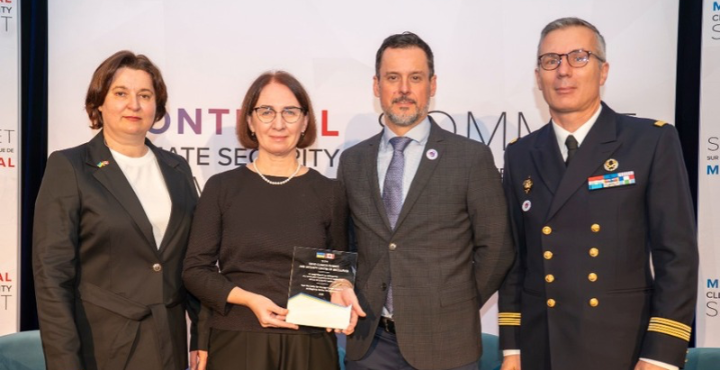
On 15–16 October 2026, the Montréal Climate Security Summit 2026 took place in Montréal, Canada. The event was organised by the NATO Climate Change and Security Centre of Excellence (CCASCOE) in cooperation with the Conference of Defence Associations Institute (CDA Institute). The Summit brought together representatives of NATO, government and defence institutions, international organisations, and the academic and expert communities to discuss emerging challenges in climate security and defence resilience.
The Summit was attended by Olena Shevchenko, Doctor of Political Sciences and Professor at the Educational and Scientific Institute of International Relations, and Zhanna Patsiora, PhD in International Relations and Director of the Centre for Strategic Communications Development and Regional Studies.
Their joint participation built on the ongoing cooperation between the Institute of International Relations and the Centre for Strategic Communications Development and Regional Studies, formalised through a Memorandum of Cooperation aimed at strengthening academic and expert collaboration and expanding international partnerships.
At the Summit, the Ukrainian experts delivered a joint presentation entitled “Climate Security in the Context of Hybrid Threats: Ukraine’s Experience of Information Resilience and Risk Communication.”
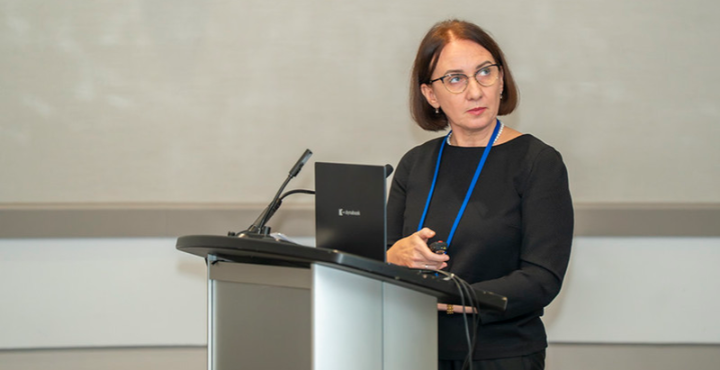
The presentation examined the transformation of climate security in the context of Russia’s aggression against Ukraine, highlighting how the environment has become an instrument of military, political, and information-psychological warfare.
Particular attention was devoted to the use of environmental and nuclear disinformation as a tool of cognitive warfare. Drawing on case studies of information operations surrounding the destruction of the Kakhovka Dam, the Zaporizhzhia Nuclear Power Plant, and nuclear threats against the Baltic states, the speakers demonstrated how fear, uncertainty, and information manipulation are used to influence public perceptions and political decision-making in Ukraine’s partner countries. They emphasised that information resilience and effective risk communication must be recognised as integral components of the contemporary international security architecture.
A key element of the presentation was the introduction of the Ukrainian Climate Shield initiative, which aims to develop practical tools for identifying information threats, countering climate disinformation, and strengthening crisis communication capabilities.
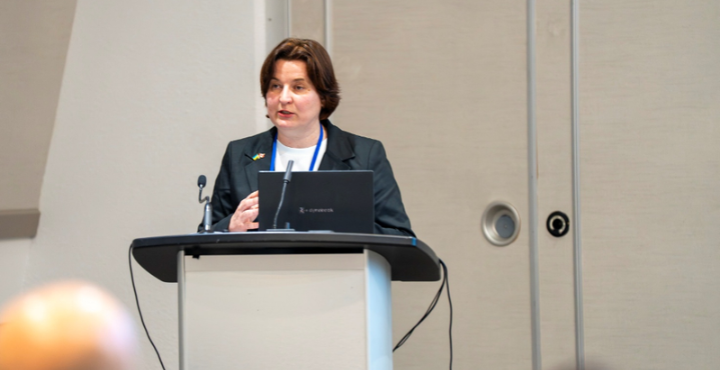
Participation in the Montréal Climate Security Summit marked a tangible outcome of the collaboration between the academic expertise of the Educational and Scientific Institute of International Relations at Taras Shevchenko National University of Kyiv and the practical expertise of the Centre for Strategic Communications Development and Regional Studies.
The Institute’s academic expertise strengthens the research dimension of the Centre’s initiatives, contributing to the development of comprehensive approaches to climate security, information resilience, and hybrid threats. This collaboration also provides opportunities to bring Ukraine’s experience and research findings to international academic and expert forums.