Lecturers from the IIR at the International Interdisciplinary Scientific Conference ‘The Future Is Already Here: Poland–Ukraine–Europe: A New Paradigm’
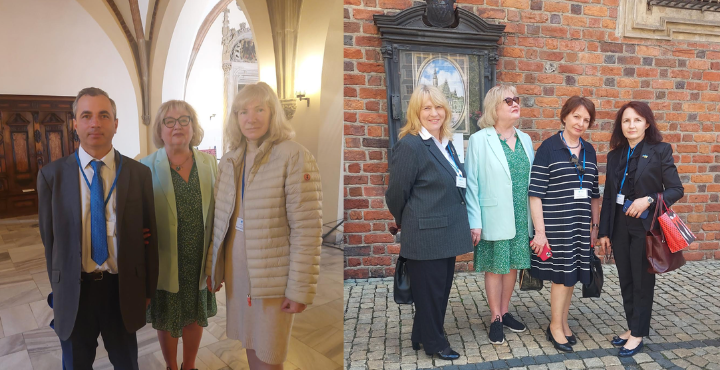
From 20 to 22 May 2026, an international interdisciplinary scientific conference titled “The Future is now. Poland–Ukraine–Europe: New Paradigm” took place at the University of Wrocław, serving as an important platform for discussing the challenges and prospects of cooperation among Ukraine, Poland, and the European community. During the event, the Centre for Polish-Ukrainian Cooperation at Wrocław University also officially launched its activities. The conference was attended by scientists, experts, representatives of local government bodies, and civil society from various European countries, exchanging knowledge and practical experience.
On 21 May, professors and postgraduate students from the Educational and Scientific Institute of International Relations and the Faculty of History at Taras Shevchenko National University of Kyiv actively participated in the conference. Their presentations focused on current issues of the Polish-Ukrainian partnership, European integration, and digital transformations.
In particular, Professor Natalia Yakovenko from the International Organisations and Diplomatic Service Chair highlighted the issue of countering Russian propaganda in her report on the concept of the Russian world as an ideological basis for Russia’s aggressive policies. The scholar emphasised that this doctrine is used not only as a tool of political influence but also to justify the war against Ukraine and interference in the internal affairs of sovereign states.
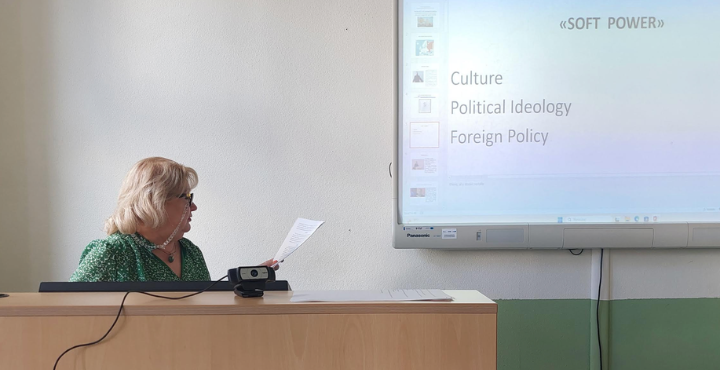
Participants also paid special attention to protecting cultural heritage during wartime. Professor Nataliia Pipchenko from the Chair of International Information presented the European experience of using artificial intelligence to preserve and restore cultural objects under threat of destruction. Her report discussed the role of AI technologies in combating historical manipulations and maintaining the authenticity of historical sources.
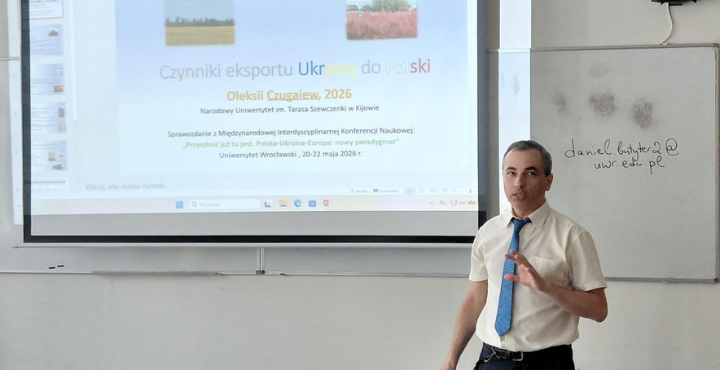
The economic segment of the conference was represented by Professor Oleksii Chugaiev from the Chair of World Economy and International Economic Relations, who examined the factors influencing Ukrainian exports to Poland and emphasised the strategic importance of the Polish market in supporting the resilience of the Ukrainian economy.
Associate Professor Natalia Teres from the Chair of Ethnology and Local History of the Faculty of History presented research on the transformation of Kyiv’s toponymy in the context of decolonisation and derussification, focusing on the emergence of names related to Poland in the capital as symbols of strategic partnership between the states. Meanwhile, Associate Professor Natalia Kuzina shared her experience of partnership with the EU in the process of rebuilding the liberated Dmytrivka community.
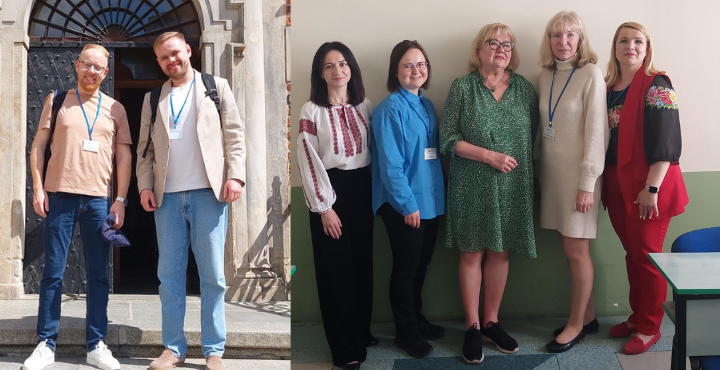
Postgraduate students from the Private International Law Chair also participated in the scientific discussion. Dmytro Naumchuk examined the role of smart contracts in fostering cross-border entrepreneurship between Ukraine and the EU, focusing on the opportunities that digital technologies offer to streamline legal procedures and support small businesses. Vadym Krasovsky analysed issues related to the taxation of Ukrainians in Poland during the period of forced migration, as well as prospects for improving Polish-Ukrainian tax cooperation.
The conference concluded on 22 May with a plenary session “Ukraine and the Future of Europe: Culture, Responsibility, and Justice”. Participants stressed that the current European reality requires both political and economic solidarity, as well as shared responsibility for regional security, the preservation of cultural heritage, and the promotion of democratic values. The event became an important platform for renewing discussions on Ukrainian-Polish cooperation and the future of Europe.