Prospects for Ukraine’s accession to the EU: Gerald Knaus, one of Europe’s leading experts on EU enlargement policy, spoke at IIR
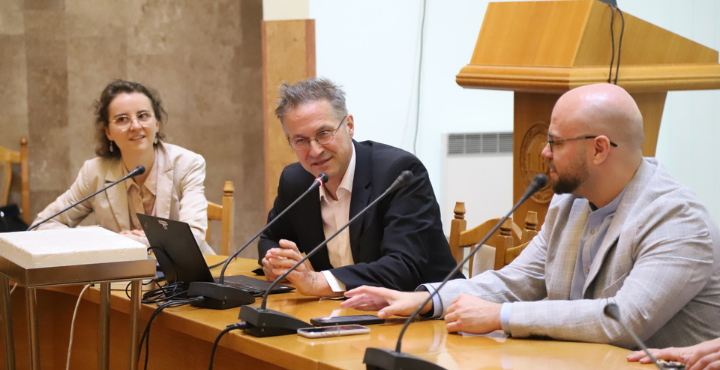
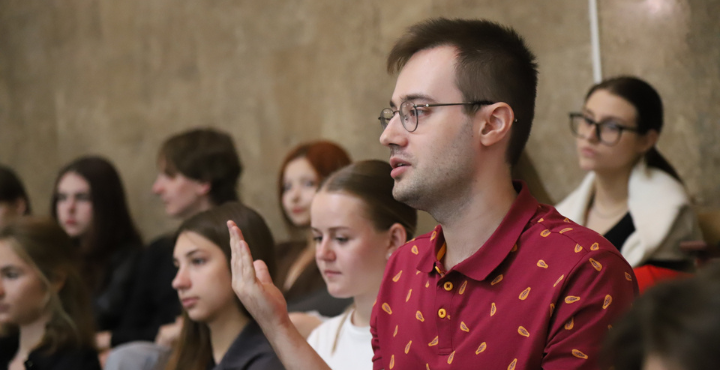
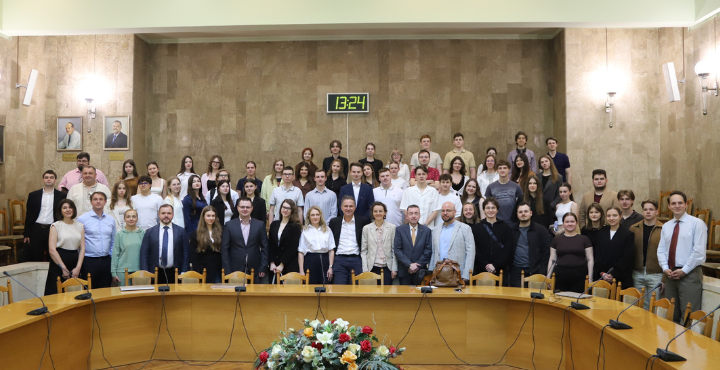
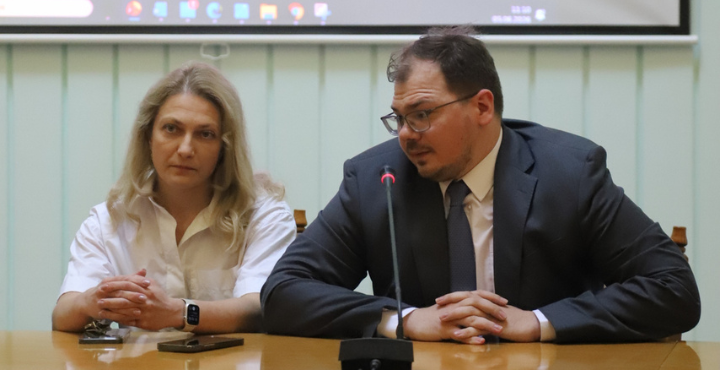
A public lecture dedicated to the analysis of Ukraine's European integration and security was held atthe Educational and Scientific Institute of International Relations, with the participation of theEuropean Policy Institute in Kyiv (EPIC). The main guests of the event were the Head of theEuropean Stability Initiative (ESI), Professor Harald Knauss, and his daughter Francesca Knauss - co-author of the book on Ukraine's integration into the EU and a foreign policy advisor to a member of the German Bundestag. The meeting took place in the format of an expert presentationand a Q&A session with students.
The main topic of discussion was the real prospects, timeframes, and obstacles on Ukraine's path tojoining the European Union, as well as the future security architecture in Europe. The speakersnoted that statements by the Ukrainian leadership regarding a rapid accession by 2027 are largelyunrealistic and create tension with allies, particularly with Germany, since the historical averagetimeframe from application to membership is 8 years.
In light of this, a rational and achievable goal for Ukraine is 2030. The experts warned Ukraineagainst the "Balkan trap" - a situation in which North Macedonia, Serbia, and Montenegro findthemselves, having been stuck in the candidate status for decades due to continuous political vetoesfrom their neighbors, which destroys faith in integration and halts internal reforms. According toobjective assessments by the European Commission, Ukraine has currently achieved an adequatelevel of preparation in only 4 out of 33 chapters, lagging behind even the Balkan countries. Thisreinforces the skepticism of European officials, who doubt Ukraine's ability to implement rapidreforms during wartime.
Among the main obstacles for Ukraine, the fear among European politicians (especially in France, Germany, and Poland) of the powerful Ukrainian agricultural sector was highlighted, sinceintegrating Ukraine into the EU's Common Agricultural Policy could provoke large-scale protestsby local farmers and play into the hands of far-right forces like Marine Le Pen's party. Furthermore, an attempt at accelerated accession would inevitably trigger a national referendum in France, whichunder current conditions carries a high risk of failure - something that would become a catastrophic, triumphant signal for Putin.
Instead of a purely symbolic or partial membership, Harald Knauss proposes an alternative strategy- the "Finnish-Swedish route". Its core idea is to focus on gaining full access to the EU singlemarket and implementing the "four freedoms" (free movement of people, goods, services, andcapital on equal terms) by 2028. This will grant Ukrainian businesses and citizens all the economicadvantages of full membership (as in Norway or Iceland), but without participation in politicalinstitutions. Such a model will reassure European farmers, since agriculture will be discussedseparately, will not require immediate referendums, and will eliminate political veto mechanisms, thereby becoming a powerful incentive for completing reforms. This very economic growth, following the example of Poland and the Baltic states, will eventually become the key to the returnof refugees and overcoming the demographic crisis.
Special attention at the meeting was given to defense. The speakers emphasized that the EU itself isnot equipped for military defense, and NATO can no longer be fully relied upon in the event ofgeopolitical changes in the United States. In this situation, Europe urgently needs a strong Ukraine, which today possesses the most experienced and powerful democratic army on the continent, whileUkraine critically needs the financial and military resources of the EU. As a realistic solution to thesecurity crisis, Professor Knauss proposed the idea of creating an intergovernmental defensealliance (similar to the 1948 Treaty of Brussels) involving Ukraine, the United Kingdom, Germany, Poland, the Baltic states, and Scandinavia. This would allow for the pooling of efforts and theeffective deterrence of Russian aggression outside the official structures of the EU or NATO.